
Vol. 01 · A knowledge commons
Riding the corridors of a continent.
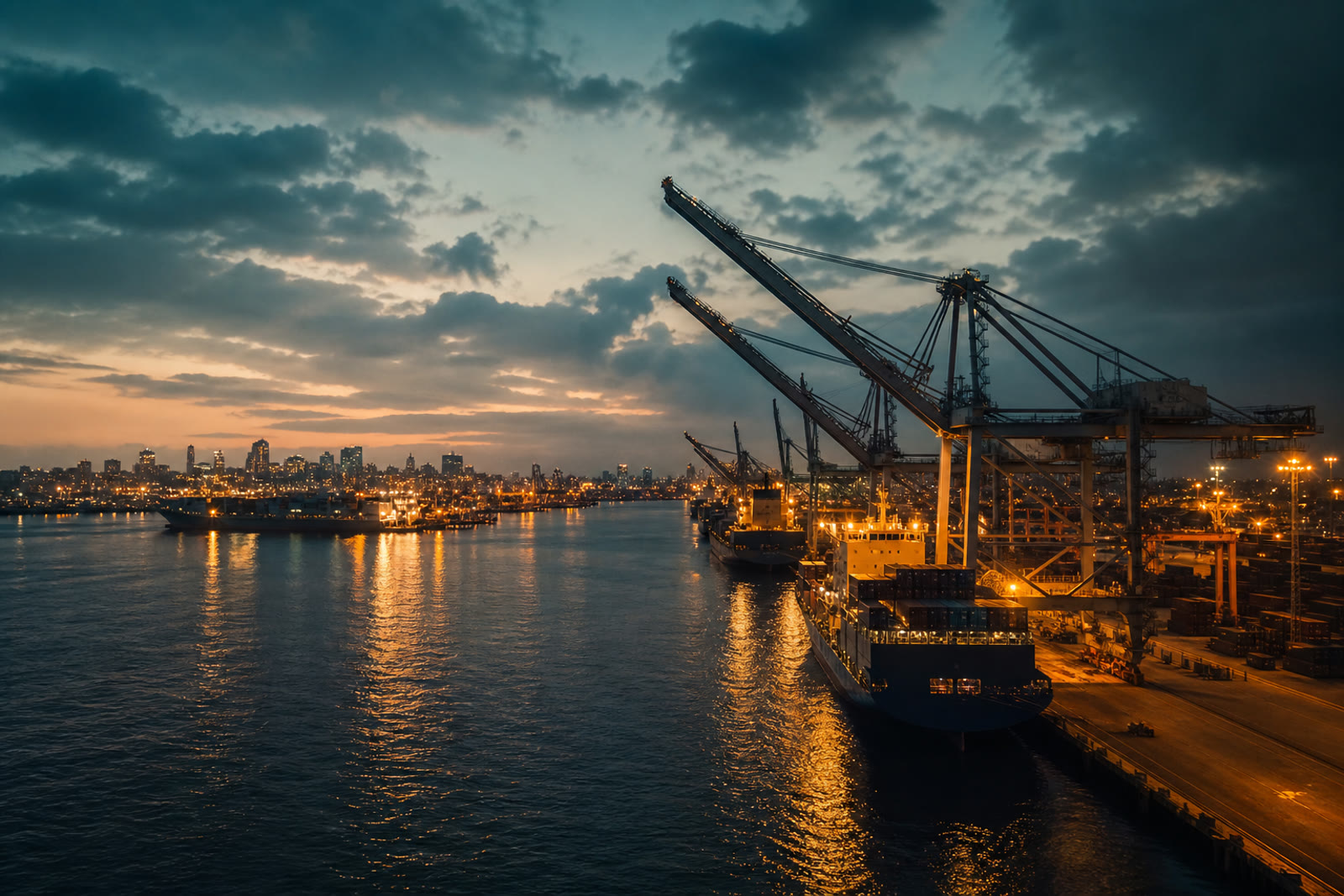
House of Knowledge is a living atlas for Africa’s development corridors — the ports, rails, roads, and policies that move goods, people, and possibility.
01 — Manifesto
Knowledge should travel as far as freight.
Corridors are more than concrete. They are institutions, habitats, border posts, and bargains. The House gathers the briefs, maps, and field notes that decision-makers rarely see in one room.

We treat every corridor as a living system: a port that sets the tempo, a dry inland that absorbs the shock, a community that hosts the line, and a climate that will rewrite the alignment.
See the spine
Read each corridor as a geography of nodes — gateways, borders, and the hinterlands they unlock.
Hold the evidence
Policy, finance, ecology, and operations sit in the same library so trade-offs are visible, not buried.
Ride with communities
Knowledge that cannot be used at the border post, the county office, or the cooperative is incomplete.
02 — Atlas
Six spines. One continent in motion.
Hover a corridor to light the route. The atlas is a reading of how goods, energy, and people currently find their way — and where the House is watching next.
Live route
Northern Corridor
Mombasa to Kampala, Kigali, Bujumbura and Goma — the oldest continuously managed trade spine in East Africa.
03 — Rooms
A house with many doors.
Each room is a way of seeing a corridor. Enter by the question you are actually trying to answer.
Policy & governance
Corridor authorities, OSBPs, AfCFTA protocols, and the quiet power of transit fees.
Infrastructure
Ports, gauge, axle loads, dry ports, and the physics that policy likes to ignore.
Climate & land
Wildlife crossings, flood plains, carbon, and the landscapes corridors cut through.
Digital corridors
e-CMR, cargo tracking, single windows, and the data that should travel with the truck.
Livelihoods
Markets that thicken along the line, and the people who host a corridor they did not draw.
Finance & deals
PPPs, blended finance, offtake, and the term sheets that decide whether a spine gets built.
04 — Living desk
What official sources said next.
05 — Field notes
What the line is teaching us.
 Trade
Trade
AfCFTA will not ride an empty road
Rules of origin only matter if the truck can leave the yard. A reading of the protocol against dwell time.
Read note → Infrastructure
Gauge, pride, and the long haul
Why incompatible rail still fragments the North–South spine — and what a corridor authority can actually fix.
Read note → Digital
A corridor is a data product
Tracking, single windows, and the politics of who sees the truck before it reaches the border.
Read note →
Membership
Come sit at the table.
The House is for corridor authorities, researchers, financiers, and communities who need a shared map — not another silo.