Essay · Trade · 14 min
AfCFTA will not ride an empty road
A continental market is a legal achievement. A corridor is a physical one. The House reads the protocol against the queue at the gate — and against the systems that claim to move trade without moving trucks.
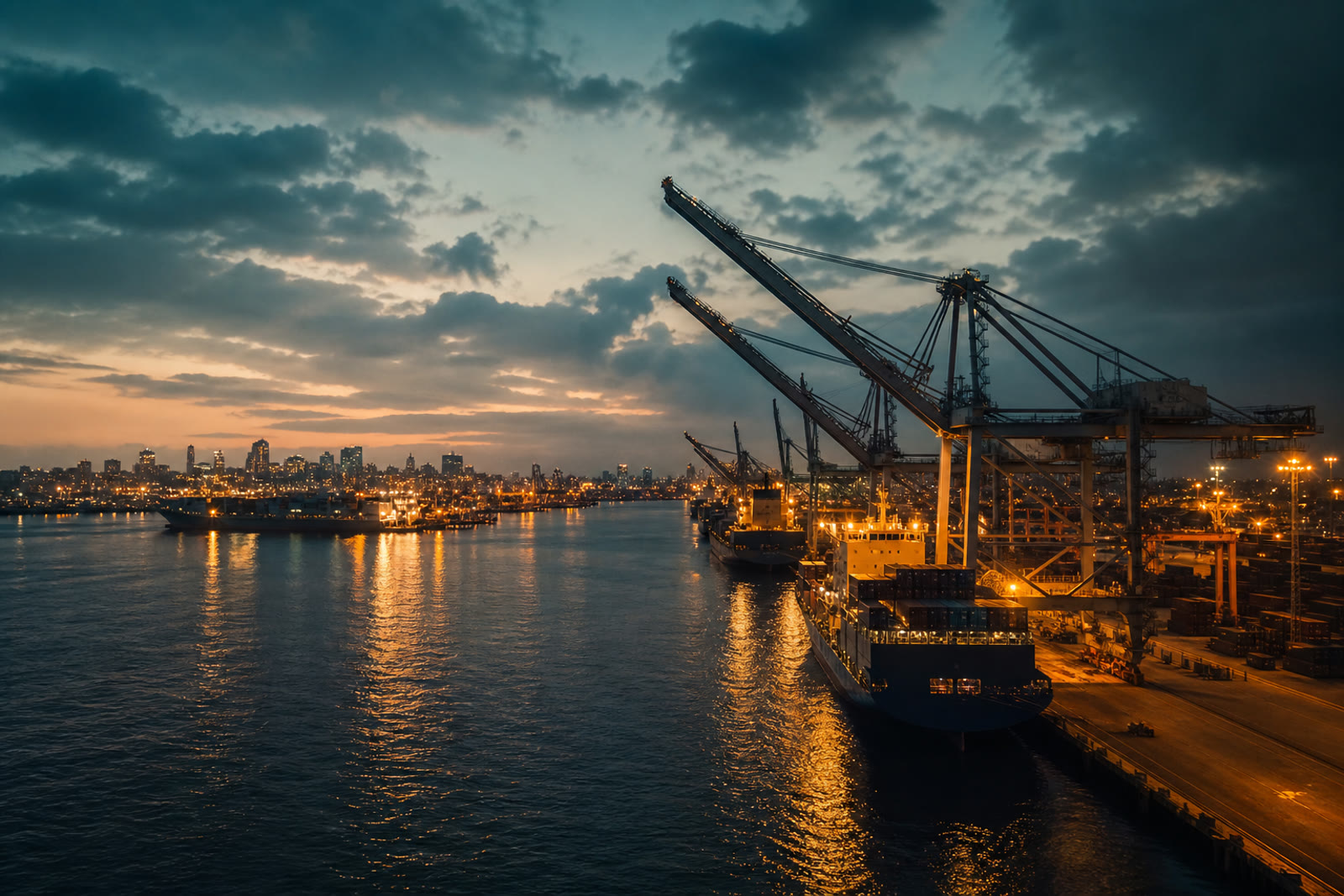
The African Continental Free Trade Area is often narrated as a signature: a moment when fifty-four members agreed, on paper, to treat the continent as a market. That story is true, and it is incomplete. Trade agreements do not move maize, clinker, or copper cathodes. Trucks do. Rails do. A berth with a working scanner does. A digital marketplace that cannot clear a consignment at Malaba is still a brochure with better typography.
House of Knowledge reads AfCFTA from the tarmac up. Rules of origin, tariff schedules, and dispute panels matter — they are the grammar. Corridors are the sentence. If the grammar is elegant and the sentence cannot be spoken at Kasumbalesa on a Thursday afternoon, the market remains aspirational.
A protocol that cannot survive a weighbridge is not yet a market.
Dwell time is a trade policy
Port dwell, border dwell, and the uncounted hours at unofficial stops are the real common external tariff for many shippers. A corridor authority that publishes those numbers in public — not as a press release, as a time series — is doing more for AfCFTA than another workshop on awareness.
The Northern and Central corridors already know this. Their performance dashboards are, in a sense, proto-continental public goods. The House’s argument is that those instruments should be treated as seriously as a tariff book: comparable, contestable, and boring in the way that good institutions are boring.
Fifty parties, and then the hard work
Somalia deposited its instrument of ratification on 4 September 2026 and became the fiftieth state party. That is a legal milestone. Preferential trade still waits on domestication of the electronic tariff book, customs configuration, and unfinished East African Community tariff and services commitments. State Party status establishes the right; the border decides whether the right can be used.
Eight regional economic communities remain the recognised building blocks of the Agreement. That architecture matters because corridor performance already lives inside REC politics — EAC single customs territory, COMESA transit, SADC gauge fights, ECOWAS coastal density. AfCFTA does not erase those rooms; it asks them to stop contradicting each other at the weighbridge.
A digital corridor is still a corridor
On 31 August 2026 the AfCFTA Secretariat and Quest Ghana Limited signed a joint-venture agreement for an AfCFTA Digital Trade Corridor — marketplace, interoperable payments, logistics, and a minerals and commodities exchange — with Seychelles as sovereign host. Quest values the project at USD 5.17 billion. The House will watch the pilot countries, not the valuation.
Digital systems that die at kilometre fourteen — USB sticks at the gate, offline scanners, payments that cannot settle in local currency — recreate the queue they promised to erase. A continental data product that cannot travel with the truck is not yet infrastructure.
Informal trade is not a rounding error
Along Abidjan–Lagos, and at countless one-stop border posts, women traders move value that never appears in the single window. A knowledge house that only shelves the formal consignment is reading half the corridor. Time poverty at the border is a tariff. Harassment is a non-tariff barrier. These are not social issues parked beside logistics. They are logistics.
What the House will keep watching
Four tests, applied without romance: Does the legal instrument shorten the queue? Does the digital system travel with the truck? Does preferential status become usable tariff configuration? Does the community that hosts the spine have a chair when the alignment is redrawn?
UNECA’s modelled uplift — a potential 45 percent increase in intra-African trade by 2045 under successful implementation — is a horizon, not a receipt. If AfCFTA is to ride, it will ride on roads that already exist, rails that may not match, and people who were never invited to the signing. The House keeps a seat for all three.