Essay · Logistics · 10 min
Dry ports as shock absorbers
A dry port is supposed to move congestion inland so the berth can breathe. Too often it only relocates the queue, transfers the demurrage, and calls the result capacity.
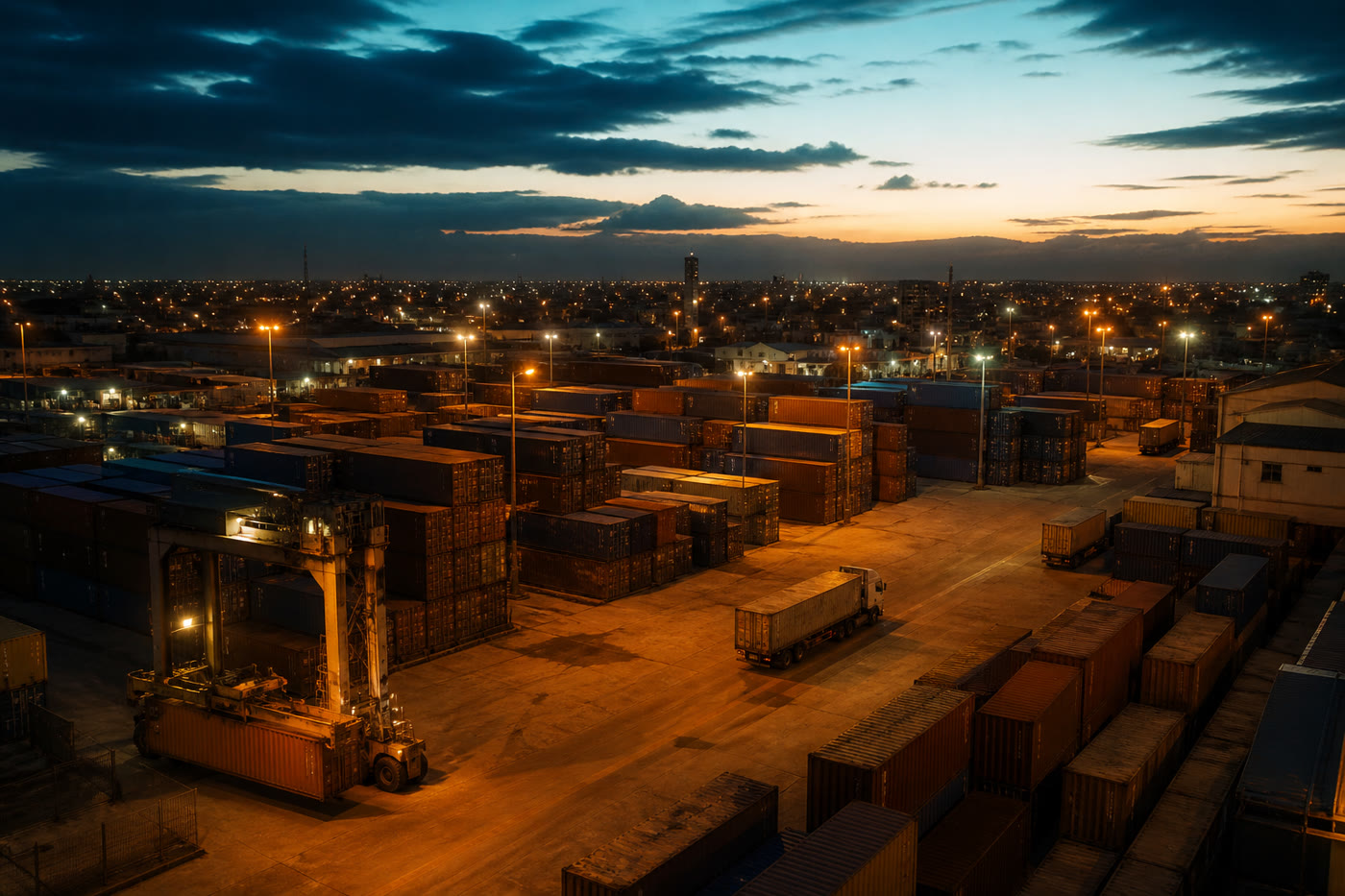
Dry ports enter corridor speeches as miracles of inland logistics: containers leave the shore, the berth clears, the hinterland prospers. Sometimes that is true. Sometimes a dry port is a warehouse with a better name — an inland queue that still depends on the same congested road, the same weighbridge culture, and the same missing rail link.
If the inland terminal cannot evacuate, it is not a dry port. It is a holding pen with branding.
What a dry port must absorb
A working dry port absorbs three shocks: berth congestion, customs batching, and modal mismatch. It needs trusted data links to the seaport, bonded status that means something, and an evacuation mode that is not wishful — rail preferred, road disciplined, not improvisational.
Walvis Bay Corridor thinking has long treated inland nodes as part of Atlantic competitiveness. The Copperbelt does not care which ocean the brochure prefers; it cares which inland terminal clears faster with fewer unofficial stops.
Berths without hinterlands
Lamu’s first three berths are complete. Cargo evacuation remains constrained by incomplete LAPSSET road links. That is the dry-port lesson written at the sea gate: capacity at the quay is not corridor capacity. Without the inland chain, you have stored water behind a dam with no canal.
Finance that funds the wrong bottleneck
Blended finance loves terminals because they photograph as assets. The House asks whether the term sheet funds the evacuation constraint or only the yard. A dry port financed without the last forty kilometres of reliable road or rail is a stranded asset with a ribbon-cutting.
Our reading: score dry ports by dwell reduction at the sea gate and by inland clearance time — not by square metres of paving. Shock absorbers are measured by what they prevent, not by what they contain.